
 EN
EN  FR
FR 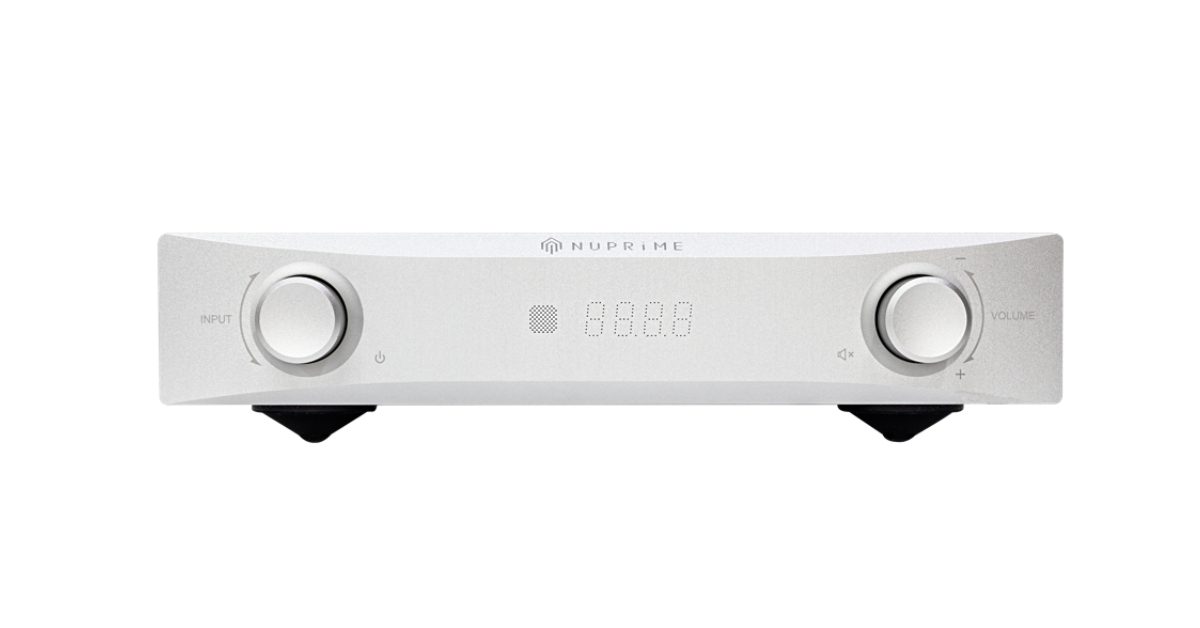
Prices listed in US$.
NuPrime’s IDA-9 caught me by surprise, for a couple of reasons: for a 200Wpc integrated amp, it’s really compact. But it’s not lightweight—holding it in my hands, it felt substantial and sturdy.
Second, its cost: US$1549, which, in this age of skyrocketing prices, never mind the general high cost of audiophile gear to begin with, sounds like a reasonable amount to spend on a quality component. That amount also became increasingly surprising the more I listened to the IDA-9. But I’m getting ahead of myself.
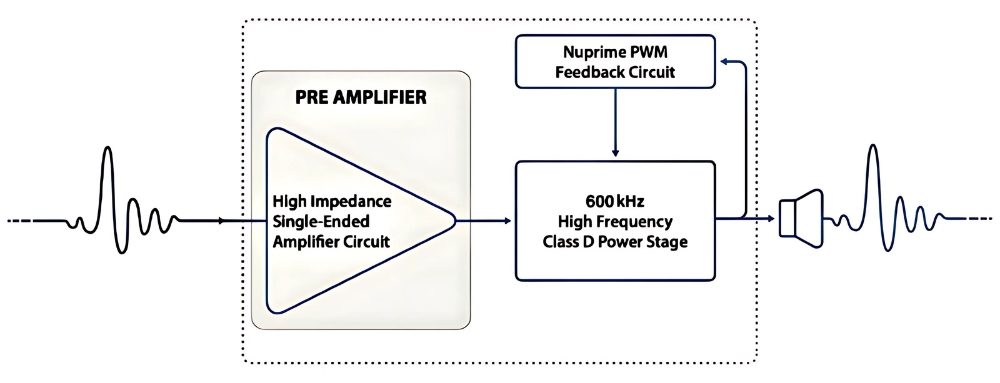
The basics: the IDA-9 is an integrated amp/DAC that combines a class-A input stage with a GaN-based class-D power stage. Having heard a few such class-A/class-D hybrids, the design has grown on me, to the point where I think I now generally prefer it to solid-state/tube hybrids. When properly executed, class-A/class-D designs can offer the tactile, free-flowing presentation of pure class-A, complemented by the dynamics, speed, and efficiency of class-D operation.
The IDA-9 is the successor to the company’s well-received IDA-8, except better. It features a reworked input stage and an upgraded class-D switching MOSFET circuit, improving on its predecessor in both resolution and power output. The IDA-8 delivered 100Wpc; the IDA-9 doubles that to 200. Yet despite the additional power, the 9 runs 30% cooler than the 8, making it more efficient. While I’ve never had the IDA-8 in my system, I can attest that after leaving the IDA-9 on for several hours at a time, it never became more than comfortably warm to the touch.

The IDA-9’s inputs include USB, Coaxial, Optical, and one pair of analog stereo RCAs, on the left of which is a pair of stereo RCA outputs. While the unit doesn’t have a built-in streamer, it does include an expansion port for Bluetooth or Wi-Fi modules, allowing it to connect to an external streaming device such as NuPrime’s own PL10 or any compatible Wi-Fi or Bluetooth dongle. The IDA-9’s DAC supports hi-res formats up to 384 kHz and DSD256.
For your $1549, you get a lot: advanced proprietary GaN class-D technology; parts by Nichicon, WIMA, EPCOS, OS-CON; NuPrime’s proprietary ultra-linear class-A/class-D ULCAM technology; hi-res USB audio compatibility; an ultra-low-noise JFET-based input stage; vibration-eradicating isolation feet; a hard copy of the user’s manual; a handy remote control: and a precision volume control that features individually adjustable and memorized volume levels for each input in 99 increments of .5dBs.
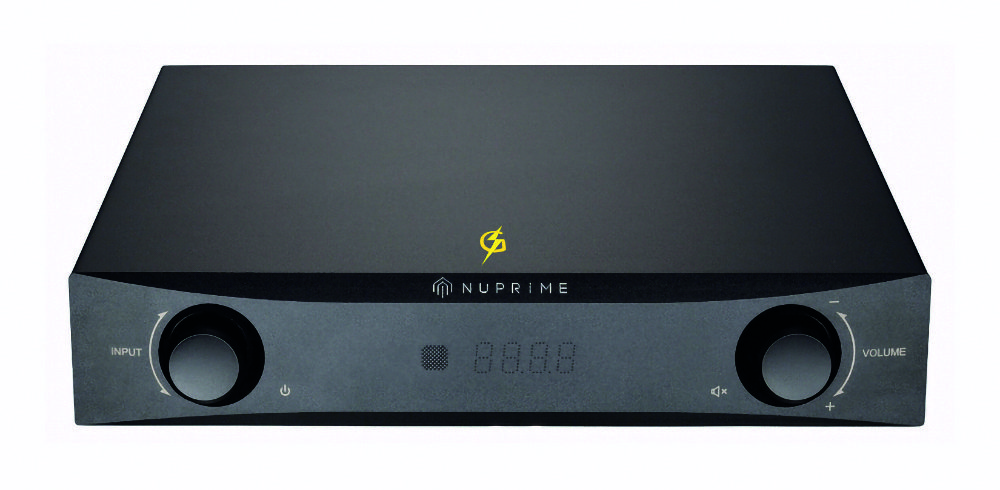
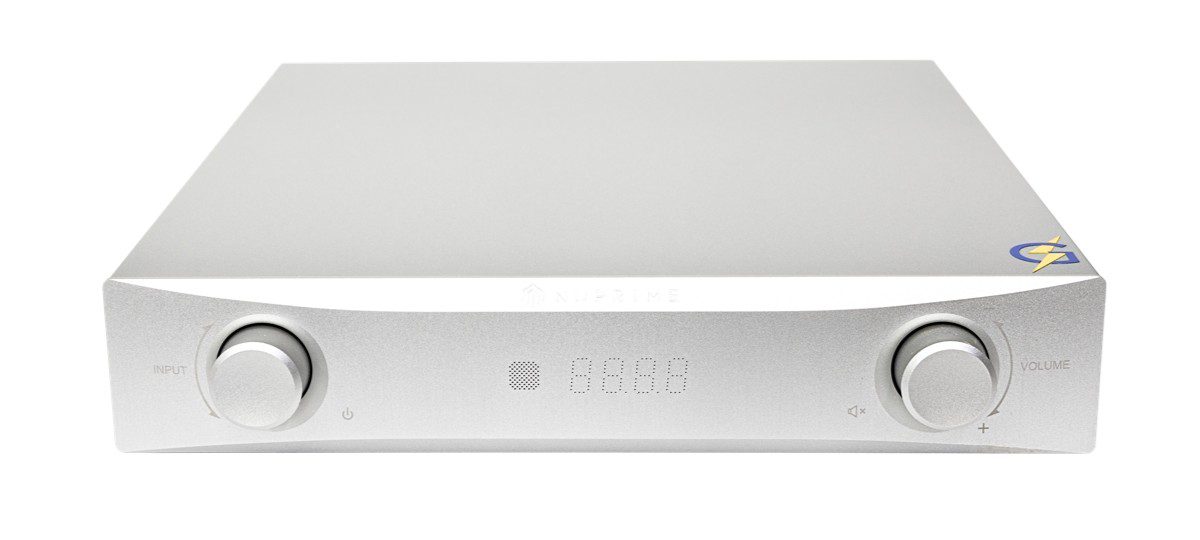
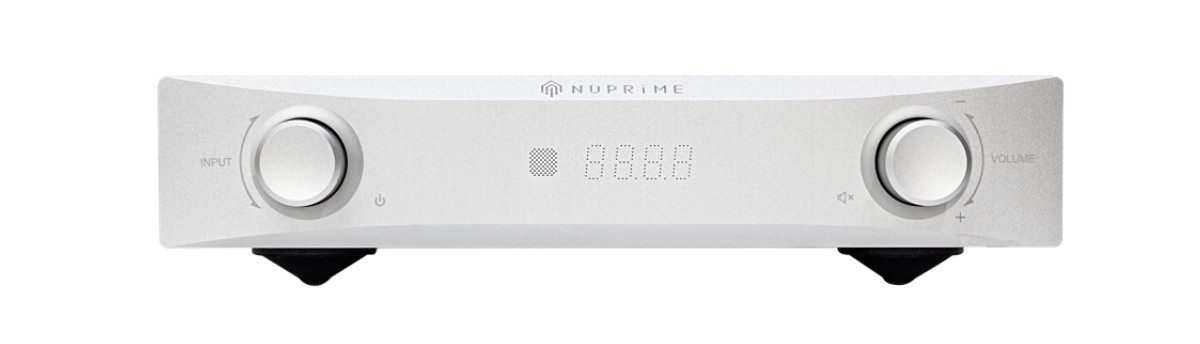
Last but not least, the IDA-9 is sleek looking and feels luxurious, from its finely textured aluminum chassis to the tactile experience you feel by pressing and holding the left-hand Input/Standby knob for a few seconds to engage or disengage standby mode. Mirroring it on the right side of the chicly beveled faceplate is an identical-looking knob for volume. Rotating either control produces a sensually satisfying shlick-shlick motion.
I recommend leaving the unit in standby mode at all times so its internals are already thermally stabilized when you listen to it. Otherwise, there’s an off/on switch at the back. You can also order the IDA-9 in a silver or black finish. I received the silver finish, and it was impeccable.
Since streaming isn’t a direct function of the 9, for my listening I stuck with CDs and hi-res FLAC files from my laptop.

As soon as I inserted the IDA-9 into my system—between my Simaudio 260D transport and Dynaudio Contour 30.1 speakers—I played a CD, the 2025 remastered movie soundtrack The Knack …and How to Get It, and was caught off guard by the sheer transparency of what I was hearing. This is an excellent sounding release—transparent, dynamic, realistic—that juggles several acoustic instruments and the IDA-9 uncovered a trove of musical information. The downside is I also noticed a lack of bass presence and harmonic plushness. It sounded a bit meagre colour- and image-solidity-wise. Thankfully, those attributes went away after a few days of the unit being played or in constant standby.
Once fully warmed up, The Knack—whose music I’d describe as jazzy within a classical arrangement—sounded tonally well balanced through the IDA-9, with excellent instrumental timbre, a finely layered soundstage, snappy transients, and dynamically slicing swings. On some gear, the album’s more dynamic passages can verge on sounding hard or bright, but the IDA-9 kept its cool, never crossing the line, yet never sounding rolled off either. What’s more is the unit sounded stunningly explicit and open—almost single-ended-triode nearfield in character. The 9 delivered a thick yet pure, energized presentation full of vivid tone, long sustains, and delicate playing technique—I was swimming in sound.
Listening to disc 2 of Neil Young’s double album compilation Decade, I was surprised by how defined and human his voice sounded, particularly on tracks 2 and 3, “Soldier” and “A Man Needs a Maid.”
“Soldier” was recorded in a reverberant space, and the effect through the IDA-9 turned my room into a cavernous recording space, with the piano set way back, plunking out big notes that resonated with heft and authority. Guitar, bass, and drum notes on “A Man Needs a Maid” were palpable, densely drawn, and anchored in space. Both songs sounded natural, and less digitally thin than I remembered them.
Charles Mingus’s Changes One delivered more of the same: a big, vibrant, harmonically charged tableau with a see-into-the-grain-of-the-notes explicitness. The double bass, drums, and piano had body and weight, along with authentic timbre.
I then went to the NuPrime website and, from the IDA-9’s product page, downloaded the USB audio driver to my PC laptop so I could use the IDA-9 to stream hi-res content through my foobar2000 music player.
With that done, I decided to play hi-res versions of releases I also owned on CD. My first pick was CSNY’s Déjà vu in 24/176. As soon as the first track, “Carry On,” started playing, the number “176” flashed on the IDA-9’s menu screen. The presentation that ensued sounded wonderful—more organic and texturally refined than that of CD’s; I could hear more into the materials of the instrument. The soundstage also seemed to have expanded inward, filling the room more, while imaging and tones had snapped further into focus.
I found a similar gain in image focus and instrumental texture from Stevie Ray Vaughn’s Couldn’t Stand the Weather in 24/176, along with more impact, especially from the drums, and overall more tonal fullness.
On a different note, for those who may be so inclined, it’s possible to bypass the IDA-9’s DAC for another one, by connecting the source (e.g., a computer, streamer, or CD transport) to the digital input (USB, coaxial, or optical) of your external DAC, then connecting the external DAC’s analogue outputs to the NuPrime IDA-9’s stereo analog RCA inputs.
Speaking for myself, I felt no need to try the IDA-9 with another DAC. Not only would this have added complexity to the setup, but the internal DAC performed irreproachably and sounded excellent. I felt no need to fiddle with something that seems to have been optimized to work with the rest. The IDA-9 sounds of a whole—a cohesive piece of gear wherein all the parts were optimized to work seamlessly together. The end result? A component that sounds so musically alive it makes a lot of its contemporaries sound lifeless in comparison.
The bottom line is the IDA-9 delivers a ton of music that hits you like an acid trip with its lush, stocky, dynamic, detail-abundant, class-A-pure, SET-like-intimate presentation.
While the IDA-9 may not deliver the instrumental scale and bold imaging as completely as some top-tier gear, I consider the NuPrime IDA-9 a reference-level piece, and not just in the budget category. Despite its size, it is a musical heavyweight and a Giant Killer.









Leave a Reply